Embedded AI // Linguwerk GmbH
Booth number: 50123-06
www.embedded.ai/
About us
At Embedded AI, the name truly reflects what we do. Embedded AI stands for the intelligent processing of complex sensor signals using customized AI algorithms on extremely compact computing platforms, such as microcontrollers. It also represents our expertise in electronics and software development, as well as connectivity and cloud computing for distributed systems—key components in modern IoT applications. We combine cutting-edge research in signal processing and artificial intelligence with practical implementation across diverse application areas, ranging from the automotive industry and industrial automation to home automation and medical technology.
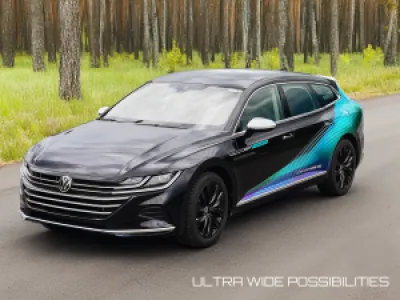
A prime example is our innovative automotive in-cabin sensing solution. While conventional systems often rely on cameras or infrared sensors, our approach leverages state-of-the-art Ultra-Wideband (UWB) radar technology to enable precise and robust detection of movement and presence inside the vehicle cabin. This allows not only for safety features such as reliable detection of left-behind children or pets, but also for advanced comfort functions—for example, automatic adjustment of climate or seating systems.
Thanks to Embedded AI’s intelligent algorithms, the raw data captured by the radar sensors is translated into a highly accurate, real-time representation of the in-cabin situation—while operating with extremely limited computing resources (e.g., 25 MHz CPU clock and 40 kB RAM). This unique expertise enables a solution that offers an exceptional balance of cost, performance, and integration effort. As a result, it provides a clear competitive advantage over existing systems and is currently attracting strong interest from leading automotive OEMs.
Address
Schnorrstraße 70
01069 Dresden
Germany
E-mail: po@embedded.ai
Phone: +49 351 4188-2885
Internet: www.embedded.ai/
Contact person:
Products & Services
Product & Service Overview
embedded AI provides advanced technology solutions and engineering services at the intersection of artificial intelligence, signal processing and embedded systems. Our expertise in radar and Ultra-Wideband technologies enables intelligent products that perceive, understand and interact with their environment in real time.
Product Solutions
Embedded AI & Edge Intelligence
AI models and intelligent algorithms optimized for execution directly on embedded devices. Our solutions enable low latency, efficient resource utilization, improved data privacy and reduced dependence on cloud connectivity.
Radar-Based Sensing
Intelligent radar solutions for detecting, analyzing and interpreting objects, movements and activities. Applications include presence and motion detection, object classification, gesture recognition and contactless sensing.
UWB Ranging & Localization
Ultra-Wideband solutions for precise distance measurement, positioning and spatial awareness. We develop UWB-based systems for secure ranging, indoor localization, asset tracking and device-to-device interaction.
Intelligent Signal Processing
Advanced signal-processing solutions that transform complex and noisy sensor data into meaningful information. Our expertise includes signal filtering, feature extraction, detection, classification and real-time data analysis.
Sensor Fusion & Intelligent Perception
Fusion of radar, UWB and additional sensor data to create a more complete and reliable understanding of the environment. Combining multiple data sources improves accuracy, robustness and situational awareness.
Engineering Services
Consulting & Feasibility Studies
We evaluate ideas, use cases and technical requirements, identify suitable technologies and create a clear development roadmap.
Algorithm & AI Development
Development of customized signal-processing algorithms, machine-learning models and AI-based detection and classification solutions.
Embedded Optimization
Optimization of algorithms and AI models for memory, processing power, latency and energy consumption on resource-constrained hardware.
Hardware & Software Integration
Integration of sensors, algorithms and AI models into embedded platforms, including interfaces, firmware and application software.
Prototyping & Proof of Concept
Rapid development of functional demonstrators and prototypes to validate technical feasibility, user value and system performance.
Testing & Validation
Systematic evaluation of algorithms and embedded implementations under realistic conditions to ensure accuracy, robustness and reliability.
Product Development Support
End-to-end support from the initial concept and technology selection through implementation and integration to a scalable, market-ready solution.
Our Core Expertise
Embedded and Edge AI
Digital signal processing
Radar sensing and perception
Ultra-Wideband ranging and localization
Machine learning and sensor-data analysis
Sensor fusion
Real-time embedded systems
Algorithm and model optimization
Hardware-software integration
CPD – Child Presence Detection using UWB (Ultra-Wideband) technology
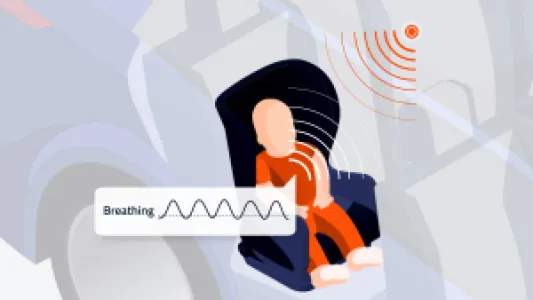
UWB radar technology enables precise Child Presence Detection (CPD) by recognizing vital signs such as breathing or heartbeat – a crucial function for preventing accidents caused by unnoticed occupants in vehicles.
The radar can detect life signs even through materials like clothing or blankets, ensuring reliable identification of living beings, even when they are covered or motionless. These capabilities form the foundation for intelligent in-cabin safety and monitoring systems.
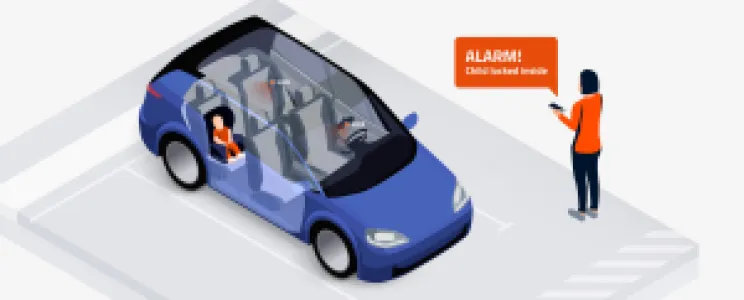
Intrusion Detection with UWB Radar for Enhanced In-Cabin Safety
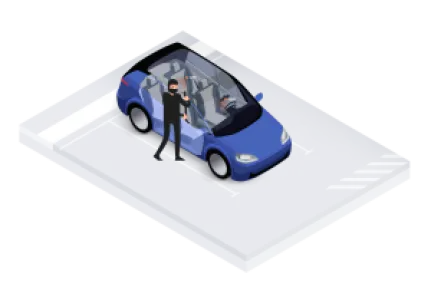
By utilizing UWB-based in-cabin monitoring even when the vehicle is parked and locked, additional cost and system efficiencies can be achieved. The technology reliably detects unauthorized movements or break-ins, making separate alarm sensors unnecessary. In this “alarm system” mode, the radar operates with a significantly reduced measurement frequency to ensure minimal standby power consumption while maintaining high detection reliability.
Precise Positioning for Automatic EV Charging with UWB (Ultra-Wideband) Technology
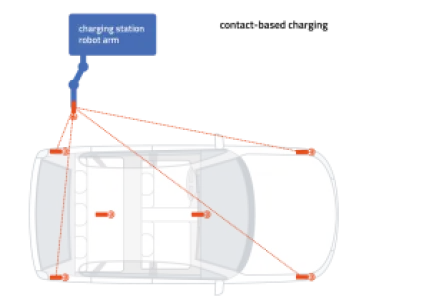
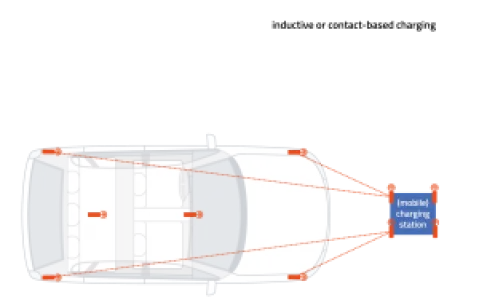
Automatic electric vehicle charging relies on precise localization to ensure a seamless connection between the vehicle and the charging system. UWB technology enables this high-accuracy positioning, allowing charging stations or robots to autonomously align with the vehicle’s charging interface—whether connecting through a conventional plug or an inductive charging surface. This precision supports fully automated parking and docking processes, both in public charging zones and private garages, paving the way for convenient, contactless, and efficient EV charging.
Hands-Free Trunk Opening with UWB (Ultra-Wideband)-Based Kick Gesture
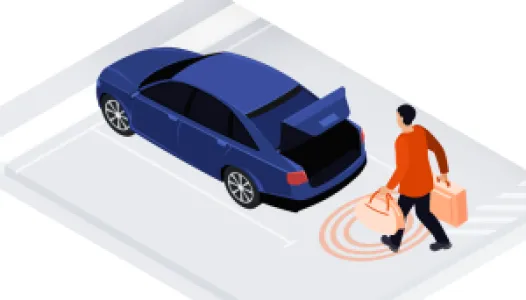
UWB technology enables a convenient and intuitive way to open the vehicle’s trunk—simply through a short foot movement beneath the rear bumper. Unlike traditional capacitive systems, which can be unreliable in rain, snow, or when the vehicle is dirty, UWB offers exceptional robustness and consistent performance in all weather and surface conditions. This precision allows effortless hands-free operation, ideal when carrying groceries or luggage. Beyond comfort and reliability, integrating UWB for multiple in-vehicle applications also reduces hardware complexity and overall system costs.
X-UWB™ – Extended UWB Automotive Platform
One UWB Sensor Infrastructure.
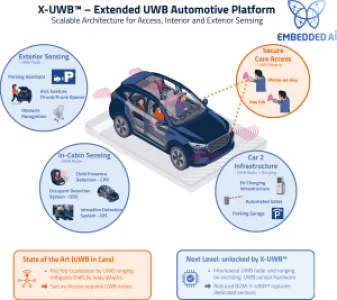
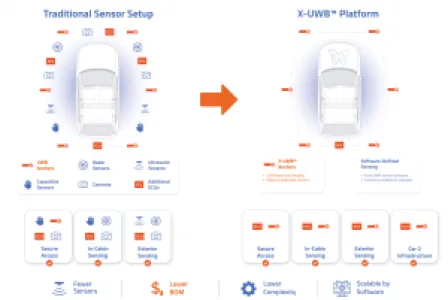
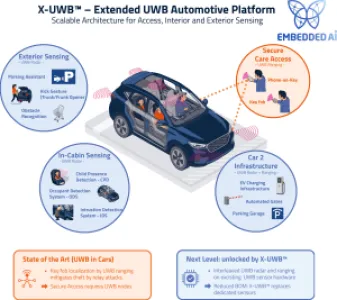
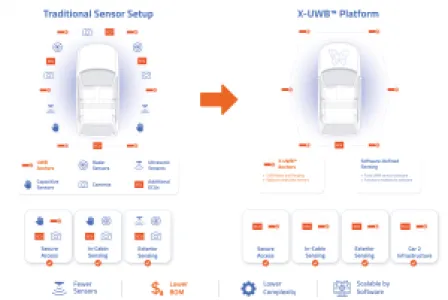
X-UWB™ introduces a platform approach for the next generation of automotive UWB systems. It builds on the UWB infrastructure already entering vehicles for secure car access and extends its role beyond opening and locking the vehicle. With radar-capable UWB chipsets, interleaved operation and the right software layer, the same vehicle nodes can evolve from dedicated access hardware into a shared sensing and communication foundation.
Multiple Vehicle Functions.
X-UWB™ enables the same UWB sensor infrastructure to support multiple application domains: in-cabin sensing (including child-presence detection, intrusion detection system and occupant detection system), exterior sensing (including obstacle recognition, kick trunk-opener and parking assistant) and car-to-infrastructure (including EV-charging infrastructure, automated gates and parking garage applications). For OEMs, suppliers and UWB chipset partners, this creates a scalable path to unlock new features, consolidate dedicated sensors and differentiate future vehicle architectures. Additional potential benefits include lower system complexity, BOM, mounting, testing, wiring and ECU-related effort.